
 Sign In
- Home
- Share Prices
- AQSE Share Prices
- Euronext
- US Share Prices
- Stock Tips
- Share Chat
- FX
- News & RNS
- Media
- Trading Brokers
- Finance Tools
- Members
Latest Share Chat
The Role of Play in Learning: How Fairview International PLC Brings the IB Philosophy to Life

Play Is Not the Opposite of Academic Excellence. In an AI Economy, It May Be the Point.
The exam season pattern is familiar. Students across the UK and Asia spend months drilling content, memorising formulae, and practising past papers. Schools are ranked by results. Parents equate grades with graduate outcomes. For much of the past century, that alignment held.
It is under significant structural strain now.
The World Economic Forum estimates that 44 percent of workers' core skills will be disrupted within five years, with automation accelerating the displacement of roles built primarily on repeatable, codified knowledge. The positions facing greatest disruption are not unskilled ones.
They are the knowledge-credentialled ones: the analyst who summarises data, the paralegal who reviews contracts, the accountant who processes returns. These are precisely the roles that exam-optimised schooling has spent decades preparing students for.
An education system that rewards memorisation above all else is, in structural terms, preparing students for positions that will not exist in the form they currently expect.
This is not an argument against academic knowledge. It is an argument about what kind of knowledge matters, and how it is built.
The misunderstanding about play
In most school cultures, play is treated as the opposite of serious learning: something appropriate for early years, before children become properly academic. It is the reward for finishing work, not the work itself.
That understanding is incomplete, and the implications are significant.
- Catch up with FIL insights here
In high-performing inquiry classrooms, play is not recreation. It is a mode of learning. It is present when a student tests an idea and finds it fails. When they build a model, argue a position, design a solution, and refine it through feedback. When they ask what if, and have the space and the skill to find out. This is disciplined play, structured by questions, guided by evidence, and assessed through criteria and reflection.
It is also the mode of thinking that artificial intelligence cannot easily replicate. Large language models can retrieve, summarise, and generate content at scale. They do not adapt under genuine uncertainty. They do not develop the contextual judgement that comes from years of testing ideas against real conditions and revising accordingly.
The students positioned well for the next economy are not those who can recall the most. They are those who can think, adapt, collaborate, and produce under pressure. These are not soft skills. They are the outputs of a different and more demanding pedagogy.
Strategic implications for school operators
The implications for international school groups are structural, not rhetorical. Schools that have built their model around examination performance face a genuine strategic question: what is the value proposition when the credential itself delivers diminishing returns in a disrupted labour market?
Schools that have invested in inquiry-led, concept-based learning, where disciplined play is embedded in the learning process rather than added on, are positioned differently. Their graduates are being prepared for a world of complexity, not a world of retrieval.
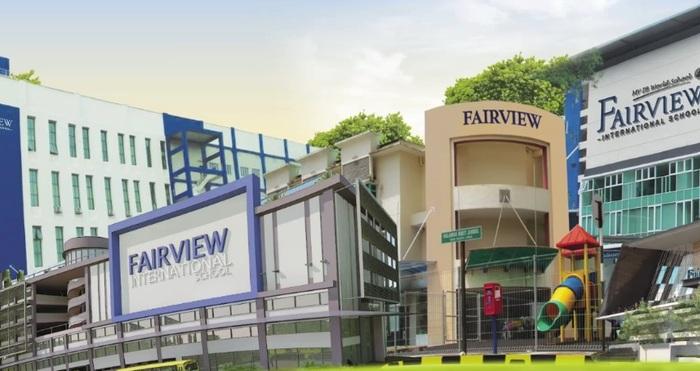
Fairview International PLC has operated within the International Baccalaureate framework across its campuses in Malaysia and the UK for over two decades. The IB's answer to the tension between knowledge acquisition and inquiry-based learning has never been to treat them as opposites. Its programmes embed inquiry, collaboration, research, creativity, and independent thinking into the learning process itself, across the Primary, Middle, and Diploma years.
The result is a graduate profile that is deliberately difficult to automate: students who have practised working under uncertainty, learned to argue and revise their positions, and developed the metacognitive capacity to continue learning after they leave school.
That constitutes a meaningful differentiator in a market where the question parents are beginning to ask is shifting. Not which school has the highest examination scores, but which school is preparing a child for the world that actually exists.
In a sector facing growing scrutiny over value and outcomes, operators with a coherent answer to that question are not simply better schools. They are better-positioned businesses.
The strongest classrooms are rigorous enough to build knowledge and open enough for students to test ideas, question assumptions, create, and learn from failure. That combination is where durable learning takes hold. And in the current environment, it is where the investment case is clearest.
Article by Dr Vincent Chian, Chief Operating Officer of Fairview International (FIL).
Latest News
- IN BRIEF: Gattaca stock surges on strong year-to-date trading
3 mins ago - Eurocell trading subdued as consumer confidence remains weak
14 mins ago - Future reaffirms outlook despite 'challenging' first half
32 mins ago - Klarna profit, revenue ahead of forecast but outlook falls short
33 mins ago - LONDON MARKET MIDDAY: Shares up as Strait of Hormuz talks lift mood
45 mins ago - UK earnings, trading statements calendar - next 7 days
49 mins ago - Helical reaches completion on London office for State Street
50 mins ago
Related News


US clears sales of Nvidia H200 chips to some Chinese firms - report
(Sharecast News) - The US has cleared about 10 Chinese companies to buy Nvidia's H200 artificial intelligence chips, it was reported on Thursday, but ...

Costain trading in line, on course for 'industry-leading' 4% margin
(Sharecast News) - Construction and engineering firm Costain said on Thursday that trading has been in line with its expectations as it reiterated tha...
 Costain Group
Shaftesbury Capital reports positive start to 2026
(Sharecast News) - Shaftesbury Capital said on Thursday that it had made a positive start to 2026, with strong leasing activity across its prime West ...
 Follow the stocks


