
 Sign In
- Home
- Share Prices
- AQSE Share Prices
- Euronext
- US Share Prices
- Stock Tips
- Share Chat
- FX
- News & RNS
- Media
- Trading Brokers
- Finance Tools
- Members
Latest Share Chat
Oil falls below $100 a barrel on Middle East peace deal hopes

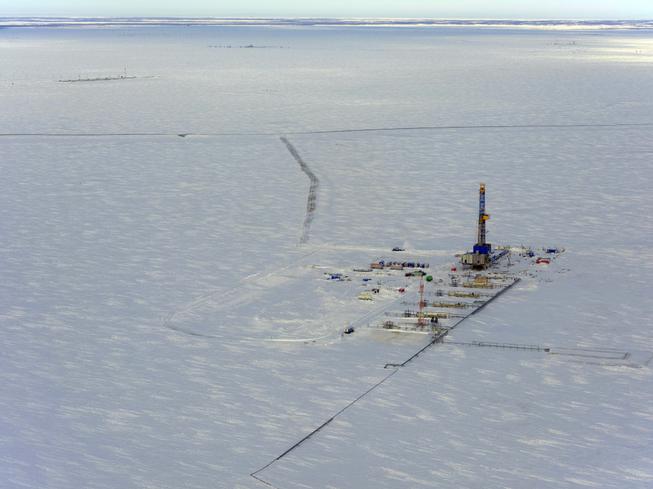
* Oil prices drop 2%, extending previous session's heavy losses
* Al Arabiya reports possible easing of U.S. blockade
* Analysts warn prices could rebound if conflict escalates again (Updates prices at 0912 GMT)
LONDON, May 7 (Reuters) - Oil prices extended losses on Thursday, sliding around 2% to below $100 a barrel on renewed hopes for a U.S.-Iran peace deal that could bring a gradual reopening of the Strait of Hormuz.
Brent crude futures fell $1.95, or 1.93%, to $99.32 a barrel by 0912 GMT. U.S. West Texas Intermediate dropped $1.93, or 2.03%, to $93.15.
Thursday's session was volatile, with Brent trading in a range of up 1% to down 3.8% versus the previous close.
Both benchmarks slumped more than 7% on Wednesday, hitting two-week lows on optimism over a possible end to the Middle East war.
Price drops continued into Thursday, as investors reacted to fresh headlines of progress towards potential peace talks.
Analysts flagged a report from Saudi Arabia's Al Arabiya news channel that understandings have been reached to ease the U.S. blockade in exchange for a gradual reopening of the Strait of Hormuz, and another by Israel's Channel 12 that Iran allegedly agreed to transfer its stockpile of 60% enriched uranium to a third country. Reuters could not immediately verify the contents of either report.
"From a broader perspective, oil markets have remained stuck between diplomacy and disruption for more than two months, with investors' emotions being manipulated by headlines almost daily," said Priyanka Sachdeva, senior market analyst at Phillip Nova.
"If a formal deal eventually materialises, oil prices could witness a free fall as geopolitical premiums rapidly evaporate from the market. However, any fresh signs of attacks on oil infrastructure or escalation in the Middle East could easily trigger another parabolic spike in crude prices."
Iran had said on Wednesday that it was reviewing a U.S. peace proposal that sources said would formally end the war while leaving unresolved the key U.S. demands that Iran suspend its nuclear programme and reopen the Strait of Hormuz.
Earlier in the week, U.S. Treasury Secretary Scott Bessent urged China to intensify its diplomatic efforts to persuade Iran to open the Strait of Hormuz to international shipping, adding that President Donald Trump and Chinese counterpart Xi Jinping will discuss the subject when they meet next week.
"While peace negotiations are likely to continue at least until next week's U.S.-China summit, the outlook beyond that remains uncertain," said Hiroyuki Kikukawa, chief strategist of Nissan Securities Investment.
Commodities Market News Oil & Gas Government & PoliticsLatest News
- Johnson Service launches GBP55 million buyback and backs margin target
8 mins ago - Tritax Big Box REIT optimistic as it progresses data centre pipeline
9 mins ago - Helios Towers lifts earnings view as data demand drives tenancy growth
26 mins ago - Norges Bank raises interest rates to 4.25%
32 mins ago - Norges Bank raises interest rates to 4.25%
32 mins ago - hVIVO signs £6m influenza clinical trial deal
35 mins ago - Coca-Cola HBC reaffirms outlook despite uncertain backdrop
37 mins ago
Related News
DNO's Iraqi Kurdistan oil production remains shut over the Iran war
OSLO, May 7 (Reuters) - Norwegian oil firm DNO said on Thursday its production in Iraq's semi-autonomous region of Kurdistan remained shut due to ...
 Dno
Dno
Grupo Carso buys additional 5% stake in Mexico's Zama oilfield from Harbour Energy
MEXICO CITY, May 6 (Reuters) - Mexico's Grupo Carso said on Wednesday it has sealed a binding agreement with Harbour Energy to buy via a s...
 Harbour Energy
Second ADNOC LNG tanker crosses Strait of Hormuz amid Iran war, ship-tracking data shows
LONDON, May 6 (Reuters) - A second liquefied natural gas tanker managed by Abu Dhabi's National Oil Company (ADNOC) has crossed the Strait of Hormu...
 Follow the stocks


