
 Sign In
Today 07:00

NEWS RELEASE 17 JUNE 2026
MINERALOGY STUDY CONFIRMS TANNENBERG CONSISTENT WITH POLISH KUPFERSCHIEFER MINES
HIGHLIGHTS
· Tannenberg mineralisation consistent with producing Polish Kupferschiefer copper-silver mines. Review by independent metallurgist from MSA Mining Consulting UK confirms potential suitability for a conventional flotation-based processing route, as used at KGHM's (WSE:KGH) long-running operations and planned for Lumina Metals' (TSE: LMCU) Nowa Sól project
· Established Kupferschiefer flowsheet provides baseline processing route for Tannenberg. KGHM's operations process 30 Mtpa at 1.6% Cu and 45 g/t Ag, achieving 89% copper and 86% silver aggregate recovery from a blended feed of Kupferschiefer shale, sandstone and carbonate-hosted mineralisation using crushing, two-stage grinding, rougher flotation, fine regrinding and multi-stage cleaning
· Modern processing technologies offer potential to enhance recoveries. Advances, including high-pressure grinding rolls (HPGR), fine-particle flotation systems and advanced reagent schemes, will be investigated, with potential to improve liberation and recovery of fine-grained copper sulphides relative to legacy flowsheets developed decades ago for KGHM
· Mineralogy study completed by SGS Lakefield on ten drill core samples. This study shows that the copper is predominantly hosted in chalcocite with additional bornite, chalcopyrite and covellite, typical of Kupferschiefer deposits
· Bi-modal copper sulphide grain size distribution identified, with both coarse (>25-30 µm) and very fine disseminated material (<5-10 µm), informing comminution and flotation circuit design
· Historical extraction at the Tannenberg Project materially de-risks metallurgy. The Tannenberg mines produced 416,500 tonnes of copper and 33.7 Moz of silver predominantly during the 1930's - 50's, when mineral processing technology was not as advanced as it is in modern times
· Supports progression to scoping-level metallurgical testwork on representative samples of each lithology to seek to confirm initial mineralogical findings, assess comminution characteristics and evaluate flotation performance
GreenX Metals Limited (ASX:GRX, LSE:GRX, GPW:GRX, Germany-FSE:A3C9JR) (GreenX or the Company) is pleased to announce that it has completed an early-stage mineralogy and processing study for its Tannenberg Copper Project (Tannenberg or the Project) in Germany. The mineralogy study was completed by SGS Canada Inc. at its Lakefield Ontario facility (SGS Lakefield). It was followed by an independent metallurgical review undertaken by MSA Mining Consulting UK Ltd (MSA-UK) through Principal Associate Metallurgist, Mr Gordon Cunningham. The review has benchmarked Tannenberg against operating and development Kupferschiefer mines in Poland, confirming that copper mineralisation at Tannenberg is consistent with copper-silver deposits in the region and is considered amenable to conventional flotation-based processing methods.
GreenX's Chief Executive Officer, Mr Ben Stoikovich, commented: "This mineralogy study confirms that the copper is contained in the same size and style of minerals as the producing Polish Kupferschiefer mines. This independent review supports a potential conventional flotation processing route, which reduces technical risk at this early stage. This gives us confidence that Tannenberg appears to have the right ingredients to follow a proven development pathway, and we will advance metallurgical test work to unlock that potential."
TYPICAL PROCESSING METHODS - KUPFERSCHIEFER OPERATIONS (KGHM AND LUMINA METALS ANALOGUES)
The sediment-hosted (Kupferschiefer) copper-silver deposits in Poland provide a well-established processing analogue for GreenX's Tannenberg Project, with both long-running operations at KGHM and a recent Preliminary Economic Assessment (PEA) for Lumina Metals' Nowa Sól Project applying similar flotation-based processing routes with selective regrinding.
At KGHM's operations, approximately 30 Mtpa of ore is treated from the Kupferschiefer sequence at an average feed grade of around 1.6% copper and 45 g/t silver. The plant processes a blended feed comprising Kupferschiefer shale, sandstone and carbonate-hosted mineralisation. Processing is based on a conventional sulphide flotation flowsheet, starting with crushing followed by two-stage grinding (rod-ball or ball-ball milling) to a primary grind size of approximately 75 µm (Source: KGHM, Micon, 2013 (see Appendix 2)).
Following grinding, the slurry is treated through flotation circuits consisting of two stages of rougher flotation. The rougher concentrate is then reground to a much finer size, typically less than 20 µm, before passing through multi-stage cleaning circuits. This combination of initial grinding and subsequent fine regrinding is critical to liberate the fine-grained copper sulphide minerals characteristic of Kupferschiefer deposits. The process produces a copper concentrate grading approximately 23% Cu and containing significant silver, with typical metallurgical performance of around 89% copper recovery and 86% silver recovery. The final concentrate is then transported to smelting and refining facilities, where copper metal is produced and silver and other by-products are recovered.
The PEA stage Nowa Sól Cu-Ag Project, owned by Lumina Metals and located within the same Kupferschiefer belt as both Tannenberg and the KGHM mines, provides a modern comparison and follows a similar processing philosophy (Source: Lumina Metals, Micon, 2026 (see Appendix 2)). The proposed flowsheet incorporates semi-autogenous grinding (SAG) with ball milling and pebble crushing, targeting a primary grind size of approximately 60 µm, followed by flotation processing. As with KGHM, the flotation circuit includes two stages of rougher flotation, with the rougher concentrate subjected to fine regrinding (to approximately 11 µm) and multiple cleaning stages to improve concentrate grade and recovery.
The Nowa Sól flowsheet is designed to produce a copper concentrate grading greater than 26% Cu, with strong silver credits (in excess of 1,200 g/t Ag), and expected recoveries of more than 88% for copper and approximately 86% for silver. The final concentrate is planned to be thickened and filtered prior to sale.
Together, these operating and development analogues demonstrate that Kupferschiefer mineralisation can be successfully processed using conventional flotation circuits that incorporate fine grinding, concentrate regrinding and multi-stage cleaning. They also highlight the importance of achieving sufficient liberation of fine-grained copper minerals, a key factor in maximising recovery and concentrate quality in this style of deposit. In the cases of both KGHM and Lumina, there remains a strong opportunity to refine and optimise the flowsheets. In KGHM's case, the plant was built many decades ago, and the Lumina flowsheet used a limited amount of sample material.
COMPARISON OF TANNENBERG COPPER-SILVER MINERALISATION WITH POLISH ANALOGUES
The new mineralogical work was completed by SGS Lakefield on ten selected historical drill core samples distributed throughout the mineralised area (Figure 1). The analysis covered three types of mineralisation, including shale, sandstone and carbonate (Figure 2) and provided confirmation of the deportment of the Tannenberg mineralisation, allowing for an important comparison to the Polish deposits. The study utilised TESCAN Integrated Mineral Analyzer (TIMA) and Scanning Electron Microscopy (SEM) techniques to characterise mineral composition, grain size and liberation behaviour.
The results indicate that copper mineralisation is dominated by chalcocite, with additional contributions from bornite, chalcopyrite and covellite, together with minor pyrite, galena and sphalerite. Copper occurs across Kupferschiefer shale, sandstone and carbonate lithologies, with the shale generally hosting the highest grades.
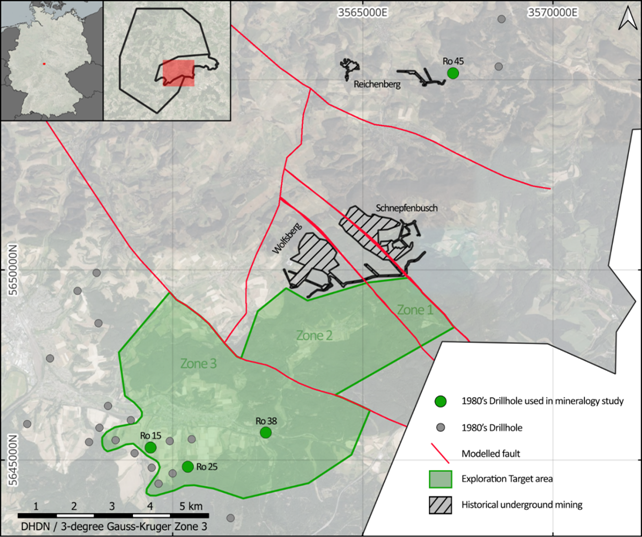
Figure 1: Map showing location of drill holes, indicating those used in the mineralogy study.
A key outcome of the study is the identification of a distinctly bi-modal grain size distribution of copper sulphides, with both coarse particles (>25-30 µm) and very fine disseminated material (<5-10 µm) present within the host rocks. This fine-grained component is pervasive, with all analysed sections containing copper mineralisation below 5 µm. The presence of this bi-modal distribution is considered a critical factor influencing comminution requirements, flotation performance and overall metallurgical recovery.
When compared to Polish Kupferschiefer operations and development projects, the Tannenberg mineralisation shows strong similarities in grain-size distribution. The presence of fine and disseminated sulphide mineralisation is consistent with observations from these analogue deposits, where fine grinding and regrinding are required to achieve adequate liberation.
Hole: Ro 45 | 268.34 m Kupferschiefer
| 269.00 m Kupferschiefer
| 269.63 m Footwall Grauligend
|
Hole: Ro 25 | 533.38 m Kupferschiefer
| 533.89 m Kupferschiefer
| |
Hole: Ro 15 | 286.24 m Hanging wall Limestone
| 287.00 m Hanging wall Limestone
| 288.20 m Hanging wall Limestone |
Hole: Ro 38 | 536.66 m Kupferschiefer
| 539.00 m Footwall Grauligend
| |
| |||
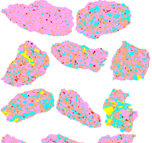
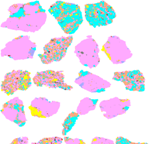
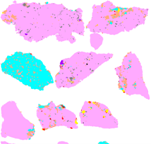
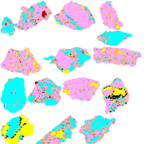
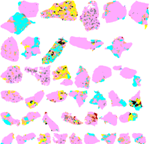
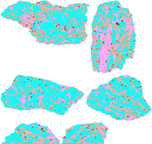
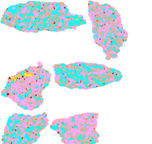
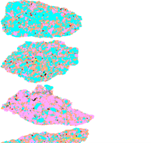
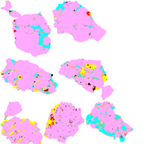
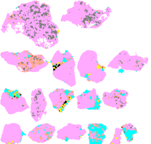


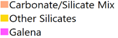
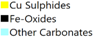


Figure 2: Copper sulphide gangue mineral association images for the ten samples which formed part of the study. The width of each image is 1.5mm.
Based on these similarities, conventional flotation processing is considered an appropriate baseline metallurgical approach for Tannenberg. The Polish analogues demonstrate that crushing, primary grinding, flotation, concentrate regrinding and multi-stage cleaning can achieve strong recoveries of copper and silver from Kupferschiefer ores. As with all such operations, the bi-modal grain size distribution identified at Tannenberg suggests that particular attention will need to be given to comminution strategy, including the potential requirement for finer grinding to effectively liberate ultra-fine copper minerals.
The mineralogical data also indicates the presence of organic carbon and minor deleterious elements, which may report to concentrate and influence product quality. As a result, future metallurgical testwork will evaluate additional processing steps, such as carbon pre-flotation or specialised reagent schemes, to optimise concentrate grade and marketability.
The Competent Person and independent metallurgical consultant, Mr Cunningham from MSA-UK, has concluded that the Tannenberg mineralisation is materially similar to Polish analogue ores. The Competent Person considers that the Tannenberg mineralisation is potentially well suited to a flotation-based processing flowsheet and that, subject to further test work, metallurgical recoveries are comparable to, or potentially better than the ~89% Cu and ~86% Ag recoveries reported from Polish mines may be achievable at Tannenberg. The Competent Person also considers that the Project may potentially produce a copper-silver concentrate of a type that could have strong market acceptance. The Competent Person has concluded, with reasonable confidence, that the following material factors support this assessment, subject to further test work:
· This new mineralogy study includes TIMA and SEM analysis conducted on 10 samples from four drill holes, which are considered representative of the Tannenberg mineralisation. The selected drill holes provide good spatial coverage of the target mineralisation, as shown in Figure 1.
· The Tannenberg mineralisation is interpreted to have formed through the same genetic process as the Polish analogue ores, with all projects existing on the same structure and mineral system, the Mid-European Crystalline Zone (please refer to GreenX's announcement dated 9 September 2025).
· Copper and silver ore-mineral grain size, host mineral associations and other deportment characteristics at Tannenberg have been found to be materially similar to the published data from the Polish analogue ores. These fundamental technical characteristics are key to determining metallurgical recovery.
· Both copper and silver were historically extracted at the Tannenberg Project through mining activities undertaken up to the 1950's.
· The metallurgical recoveries referenced above are consistent with the 2013 Technical Report prepared by Micron International Limited, an independent consultant to KGHM (Refer to Appendix 2).
· Modern developments in copper processing technologies may provide opportunities to improve overall metallurgical recoveries relative to the KGHM mines, which were constructed in the 1960s.
This initial mineralogical assessment at Tannenberg also highlights the importance of detailed metallurgical testwork to optimise grind size, concentrate quality and recovery for the Project. The shallow depth of the Tannenberg Project, with the existence of spoil heaps and potentially accessible old workings will facilitate metallurgical test work being conducted during early project study phases.
RECENT DEVELOPMENTS IN COPPER PROCESSING TECHNOLOGIES
While Kupferschiefer deposits in Poland have been processed for decades using conventional flotation circuits, more recent technological developments offer opportunities to enhance metallurgical performance.
Advances in comminution technologies, such as HPGR, can improve the liberation of fine-grained copper minerals by breaking ore along natural grain boundaries. This is particularly important for Kupferschiefer mineralisation, where a significant portion of copper occurs in very fine particles.
In addition, modern flotation technologies and specialised fine-particle recovery systems can improve recovery of ultra-fine sulphide minerals, while advanced reagent schemes and pre-treatment steps, such as carbon pre-flotation, may further enhance concentrate grade.
These developments indicate that modern flowsheets have the potential to achieve improved copper and silver recoveries compared to historic operations, particularly for fine-grained Kupferschiefer ores.
Upcoming Work Programs
In addition to the ongoing exploration activities, GreenX will advance the next stage of processing work and focus on scoping-level metallurgical test work using representative samples collected from the key mineralised lithologies. This program will be designed to confirm the initial mineralogical findings, assess comminution characteristics and evaluate flotation performance, including recovery, concentrate grade and reagent selection.
Results from this test work will be used to develop a preliminary metallurgical flowsheet for the Tannenberg Project. This flowsheet will provide the basis for subsequent, more advanced metallurgical programs, including variability testing, optimisation of grind size and flotation conditions, and detailed assessment of concentrate quality and processing performance.
ENQUIRIES
Ben Stoikovich Chief Executive Officer | Kazimierz Chojna Investor Relations - Poland
|
+44 207 478 3900 ir@greenxmetals.com | Kim Eckhof Investor Relations - UK/Germany
|
Competent Persons Statement (Exploration Results)
The information in this announcement that relates to Exploration Results is based on information compiled by Dr Matthew Jackson, a Competent Person who is a Member of the Australasian Institute of Mining and Metallurgy. Dr Jackson is a Technical Consultant for GreenX and is a holder of unlisted options in the Company. Dr Jackson has sufficient experience that is relevant to the style of mineralisation and type of deposit under consideration and to the activity being undertaken, to qualify as a Competent Person as defined in the 2012 Edition of the 'Australasian Code for Reporting of Exploration Results, Mineral Resources and Ore Reserves'. Dr Jackson consents to the inclusion in this announcement of the matters based on his information in the form and context in which it appears.
Competent Persons Statement (metallurgy MINERALOGY STUDY)
The information in this announcement that relates to Exploration Results (metallurgy mineralogy study) is based on information compiled by Mr Gordon Cunningham, a Competent Person who is a Member of the Engineering Council of South Africa and a Fellow of the South African Institute of Mining and Metallurgy, a Recognised Professional Organisation included in a list promulgated by ASX from time to time. Mr Cunningham is a Technical Consultant for MSA Mining Consulting UK Ltd. Mr Cunningham has sufficient experience that is relevant to the style of mineralisation and type of deposit under consideration and to the activity being undertaken to qualify as a Competent Person as defined in the 2012 Edition of the 'Australasian Code for Reporting of Exploration Results, Mineral Resources and Ore Reserves'. Mr Cunningham consents to the inclusion in this announcement of the matters based on his information in the form and context in which it appears.
Forward Looking Statements
This release may include forward-looking statements, which may be identified by words such as "expects", "anticipates", "believes", "projects", "plans", and similar expressions. These forward-looking statements are based on GreenX's expectations and beliefs concerning future events. Forward looking statements are necessarily subject to risks, uncertainties and other factors, many of which are outside the control of GreenX, which could cause actual results to differ materially from such statements. There can be no assurance that forward-looking statements will prove to be correct. GreenX makes no undertaking to subsequently update or revise the forward-looking statements made in this release to reflect the circumstances or events after the date of that release.
The information contained within this announcement is deemed to constitute inside information as stipulated under the Regulation 2014/596/EU which is part of domestic law pursuant to the Market Abuse (Amendment) (EU Exit) Regulations (SI 2019/310) ("UK MAR"). By the publication of this announcement via a Regulatory Information Service, this inside information (as defined in UK MAR) is now considered to be in the public domain.
REFERENCES AND SOURCES
Please refer to Appendix 2 below.
Appendix 1: Exploration Results and JORC Tables
Table 1: Historical drill hole information (used for process mineralogy study)
Hole ID | Easting | Northing | Elevation (m MSL) | Dip (°) | Depth (m) |
Ro 15 | 4348595 | 5647200 | 255 | 90 | 351 |
Ro 25 | 4349554 | 5646656 | 331 | 90 | 553 |
Ro 38 | 4351640 | 5647472 | 249 | 90 | 559 |
Ro 45 | 4356946 | 5656716 | 407 | 90 | 289 |
Note: Coordinates are DHDN / 3-degree Gauss-Kruger zone 4.
JORC Code, 2012 Edition - Table 1 Report
Section 1 Sampling Techniques and Data
(Criteria in this section apply to all succeeding sections.)
Criteria | JORC Code explanation | Commentary |
Sampling techniques | Nature and quality of sampling (eg cut channels, random chips, or specific specialised industry standard measurement tools appropriate to the minerals under investigation, such as down hole gamma sondes, or handheld XRF instruments, etc). These examples should not be taken as limiting the broad meaning of sampling. | 1980's Drilling Campaign All 1980's analyses reported in this announcement were from diamond drill core. The core for the holes was 47 mm diameter in all cases, except Ro 17 and Ro 15 where core was 60 mm in diameter. Due to the historic nature of the drilling results reported herein, it is not possible to comment on the quality of the drilling used to produce the results described. Sampling of ¼ core was conducted during multiple exploration phases between 1980 and 1987 within the licence area by St Joe. The 1980's information was collated from original hard copy reports from that era and a State Survey Database. Assays, geological logging and gamma ray logs were conducted by St Joe Explorations and Mansfeld AG. No other information is available for the exploration drilling. 2025 Logging and Resampling Program The core used for the program had been sampled to varying degrees during the 40 years in storage. Sampling restrictions were placed on the program by the owners. As such, two sampling protocols were used: ¼ core sampling and sliver sampling. Where ¼ core sampling was employed, the program used industry standard methods to take 25% of the core which was originally extracted from the hole. Sliver sampling was employed where only 25% of the core was available in order to leave core in the box to maintain the archive correctly. In this case 20% of the remaining 25% was sampled using a specialist saw. Where this resulted in low sample mass, the interval lengths were increased in order to maintain suitable representivity. For the intervals from most holes (Ro 38, Ro 17, Ro 25 and Ro 45), ¼ core was sampled for the majority of the samples and sliver sampling for the remaining narrow intervals. For the hole Ro 23, 79% of the sampling was conducted using the sliver method and the remaining using ¼ core. For the intervals from Ro 15 only sliver sampling was used. A handheld XRF was used to assist with confirming the representivity of the sliver sampling and determining sample. |
| Include reference to measures taken to ensure sample representivity and the appropriate calibration of any measurement tools or systems used. | 1980's Drilling Campaign No details covering the representivity of the samples for 1980's assays were reported by the authors. 2025 Logging and Resampling Program Due to the extremely fine-grained mineralisation and matrix of Kupferschiefer Mineralisation (eg Rahfeld, 2018), the heterogeneity of the sampled materials is known to be extremely low. By comparison with other deposits, fundamental sampling error (FSE) is likely to be between 2-5% coefficient of variation (Absalov, 2011). This means that the introduction of error from sub-sampling of the core and samples will be negligible and very low sample sizes are suitable for assessing grade. In order to further validate the low FSE, in the sliver samples. pXRF measurements were made at spacings of 5-10cm where sliver samples were taken. The results of the pXRF measurements confirmed that a very low error was found and that the use of sliver samples is suitable for assessing grade. A handheld XRF was used only for validation of sliver samples and assisting with selection of sample intervals. The Olympus Vanta (V2MR) configured with the GeoChem(3) calibration. A reading time of 40 seconds was used. A blank standard or CRM was analysed daily before the start of work. Procedures were in place to ensure correct operation. |
| Aspects of the determination of mineralisation that are Material to the Public Report. In cases where 'industry standard' work has been done this would be relatively simple (eg 'reverse circulation drilling was used to obtain 1 m samples from which 3 kg was pulverised to produce a 30 g charge for fire assay'). In other cases more explanation may be required, such as where there is coarse gold that has inherent sampling problems. Unusual commodities or mineralisation types (eg submarine nodules) may warrant disclosure of detailed information. | 2025 Logging and Resampling Program Sampling ¼ core followed industry standard procedures. The same side of the core was sampled throughout each hole. The samples were cut using an automated saw designed for core cutting in order to eliminate any sample loss. The use of sliver sampling is uncommon in many deposits, although known to be used in some sedimentary hosted copper deposits similar to the Kupferschiefer. Due to the extremely fine-grained mineralisation and matrix of Kupferschiefer Mineralisation (eg Rahfeld, 2018), the heterogeneity of the sampled materials is known to be extremely low. By comparison with other deposits, FSE is likely to be between 2-5% coefficient of variation (Absalov, 2011). This means that the introduction of error from sub-sampling of the core and samples will be negligible and very low sample sizes are suitable. |
Drilling techniques | Drill type (eg core, reverse circulation, open-hole hammer, rotary air blast, auger, Bangka, sonic, etc) and details (eg core diameter, triple or standard tube, depth of diamond tails, face-sampling bit or other type, whether core is oriented and if so, by what method, etc). | 1980's Drilling Campaign The samples were all taken from core and the core for the holes was 47 mm diameter in all cases, except Ro 17 and Ro 15 where core was 60 mm in diameter. No other details of the drilling are available. |
Drill sample recovery | Method of recording and assessing core and chip sample recoveries and results assessed.
| Core recoveries for the relevant intercepts are as follows: · Ro 15 96% · Ro 25 100% · Ro 38 100% · Ro 45 100% The recoveries reported here are measured from the core available for sampling in 2025. |
| Measures taken to maximise sample recovery and ensure representative nature of the samples. | Not known. |
| Whether a relationship exists between sample recovery and grade and whether sample bias may have occurred due to preferential loss/gain of fine/coarse material. | It is believed that low core recoveries in some cases may have been caused by researchers removing small sections of the core that contained elevated copper. For that reason, a core recovery limit of 90% was used to select which holes to report. Due to the same possibility of past researchers removing copper enriched parts, it is possible that the intervals announced here may under-report copper. The addition of the 90% core recovery selection criteria has limited that effect. |
Logging | Whether core and chip samples have been geologically and geotechnically logged to a level of detail to support appropriate Mineral Resource estimation, mining studies and metallurgical studies. | Geological and geotechnical logging has been completed according to industry best practice and would be suitable to support Mineral Resource Estimation. Note that JORC Mineral Resources not reported in this announcement. |
| Whether logging is qualitative or quantitative in nature. Core (or costean, channel, etc) photography. | Geological and geotechnical logging is qualitative. Wet and dry core photos have been taken. |
| The total length and percentage of the relevant intersections logged. | 1980's Drilling Campaign The entire hole was logged, the target zone is typically 2 m thick. 2025 Logging and Resampling Program All available core was logged. The amount of available core always included the mineralised T1 stratigraphic horizon and was a minimum of 10m above and below that unit. In most cases at least 90m of core was logged and some cases the entire hole. |
Sub-sampling techniques | If core, whether cut or sawn and whether quarter, half or all core taken. | 1980's Drilling Campaign Samples were sawn using ¼ core. 2025 Logging and Resampling Program Where ¼ core was sampled, industry standard sampling methods were used. Where sliver samples were taken, a small rock saw was used to take 20% of the ¼ core that was available. In all cases the same side of the core was sampled from top to bottom. 2026 Process Mineralogy Study A sub sample of coarse rejects (2mm) was taken using a Jones Type Riffle splitter at SGS Ankara. |
a | If non-core, whether riffled, tube sampled, rotary split, etc and whether sampled wet or dry. | N/A |
| For all sample types, the nature, quality and appropriateness of the sample preparation technique. | 1980's Drilling Campaign Methods unknown. 2025 Logging and Resampling Program Industry standard and accredited techniques were used in all cases. Samples were weighed, then crushed in a jaw crusher to 75% passing 2 mm. The crushed sample was then split using a rotary splitter to 250 g. The sub sample was then pulverised to 85% passing a 75 µm. All procedures were accredited to ISO/IEC 17025 standard. |
| Quality control procedures adopted for all sub-sampling stages to maximise representivity of samples. | 1980's Drilling Campaign Methods unknown. 2025 Logging and Resampling Program Screen tests were performed and reported for both crushing and pulverising stages. The results showed that comminution met and exceeded the standards above. 2026 Process Mineralogy Study The results of screen tests demonstrate that sub sampling for process mineralogy was appropriate and no bias has been introduced. |
| Measures taken to ensure that the sampling is representative of the in situ material collected, including for instance results for field duplicate/second-half sampling. | 1980's Drilling Campaign Methods unknown. 2025 Logging and Resampling Program Industry standard quality control methods were used. GRX used coarse and pulp duplicates were inserted at a frequency of 1/50 each. Field duplicates were not used due to restrictions on the proportion of core available for sampling. The maximum error between crush duplicates was found to be 2.0% and 0% for Cu and Ag respectively, which supports the view the FSE is low and that sliver sampling was representative of the mineralisation. |
| Whether sample sizes are appropriate to the grain size of the material being sampled. | 1980's Drilling Campaign Methods unknown, but given that ¼ core was sampled, samples are likely to meet modern industry standards. 2025 Logging and Resampling Program For the ¼ core samples masses were between 0.19 kg and 7.89 kg. This is appropriate. For the sliver samples, masses were between 0.1 kg and 0.84 Kg. This is appropriate given the low FSE, validation by pXRF and low error seen in coarse duplicates. 2026 Process Mineralogy Study The stoichiometric "TIMA Calculated" assay was found to show an excellent correlation with the chemical assays, hence the sample size and splitting method used for the mineralogy study can be considered to be appropriate. |
Quality of assay data and laboratory tests | The nature, quality and appropriateness of the assaying and laboratory procedures used and whether the technique is considered partial or total. | 1980's Drilling Campaign Geochemical analysis was carried out by Robertson Research Ltd, Wales, however the precise nature quality and appropriateness of the assaying is unknown. The precise nature quality and appropriateness of the assaying is unknown. 2026 Process Mineralogy Study Industry standard and accredited procedures were used. All samples were analysed using a four-acid digestion with an Inductively Coupled Plasma - Atomic Emission Spectroscopy (ICP-AES) finish. Where analyses were found to be above detection limits, an Atomic Absorption Spectroscopy (AAS) finish was used. All procedures were accredited to ISO/IEC 17025 standard. Although no industry accreditations are available for such mineralogy studies, the work was performed to internal standards set up by SGS Lakefield who have an excellent reputation for such work. |
| For geophysical tools, spectrometers, handheld XRF instruments, etc, the parameters used in determining the analysis including instrument make and model, reading times, calibrations factors applied and their derivation, etc. | 2026 Process Mineralogy Study No geophysical tools, spectrometers, handheld XRF or similar devices were used in this study. Mineralogy data was collected using TESCAN Integrated Mineral Analyzer (TIMA) and Scanning Electron Microscopy (SEM) instruments which were calibrated according to manufacturers specifications. |
| Nature of quality control procedures adopted (eg standards, blanks, duplicates, external laboratory checks) and whether acceptable levels of accuracy (ie lack of bias) and precision have been established. | 2025 Logging and Resampling Program Quality Control samples were added at a rate of 10%. For every 100 samples, 4 Certified Reference Materials were used, two Pulp duplicates, two crush duplicate and two blanks were inserted. Certified reference materials were matrix matched where possible and included cut-off grade materials for copper and silver. 2026 Process Mineralogy Study QC samples are not suitable for quality control of such work. However the stoichiometric "TIMA Calculated" assay was found to show an excellent correlation with the chemical assays, hence the sample size and splitting method used for the mineralogy study can be considered to be appropriate. |
Verification of sampling and assaying | The verification of significant intersections by either independent or alternative company personnel.
| No significant intersections reported. |
| The use of twinned holes. | No twinned holes reported. |
| Documentation of primary data, data entry procedures, data verification, data storage (physical and electronic) protocols. | 2026 Process Mineralogy Study TIMA and SEM work was carried out separately and found to show similar grain size and mineral chemistry results. |
| Discuss any adjustment to assay data. | No adjustments made. |
Location of data points | Accuracy and quality of surveys used to locate drill holes (collar and down-hole surveys), trenches, mine workings and other locations used in Mineral Resource estimation. | Location accuracy is unknown. The location of holes drilled by St Joe Explorations comes from collar tables in historical reports. All other collar locations come from State/Federal databases. |
| Specification of the grid system used. | 1980's Drilling Latitude and Longitude in degree, minutes and seconds were provided for collars by St Joe Explorations. |
| Quality and adequacy of topographic control. | Unknown |
Data spacing and distribution | Data spacing for reporting of Exploration Results. | 1980's Drilling Between 400 m to 700 m. |
| Whether the data spacing and distribution is sufficient to establish the degree of geological and grade continuity appropriate for the Mineral Resource and Ore Reserve estimation procedure(s) and classifications applied. | N/A, JORC Mineral Resources not reported. |
| Whether sample compositing has been applied. | N/A |
Orientation of data in relation to geological structure | Whether the orientation of sampling achieves unbiased sampling of possible structures and the extent to which this is known, considering the deposit type. | N/A |
| If the relationship between the drilling orientation and the orientation of key mineralised structures is considered to have introduced a sampling bias, this should be assessed and reported if material. | N/A |
Sample security | The measures taken to ensure sample security. | 1980's Drilling Campaign Methods not known. 2025 Logging and Resampling Program Full chain of custody tracking was completed for all transportation of core and samples. |
Audits or reviews | The results of any audits or reviews of sampling techniques and data. | No audits completed. |
Section 2 Reporting of Exploration Results
(Criteria in the preceding section also apply to this section.)
Criteria | JORC Code explanation | Commentary | |
Mineral tenement and land tenure status | Type, reference name/number, location and ownership including agreements or material issues with third parties such as joint ventures, partnerships, overriding royalties, native title interests, historical sites, wilderness or national park and environmental settings. | The Tannenberg 1 licence is held 100% by Group 11 Exploration GmbH (Group 11) a subsidiary of GreenX. The licences were awarded on the 6th June 2025 for three years and has now been extended for a further three years to 6 June 2028. The licence is free from overriding royalties and native titles interests. There are historical mine workings within the licence area, but no known historical sites of cultural significance outside of mining. The Tannenberg 2 exploration licence is also held 100% by Group 11. The licence was granted effective 22 April 2025 and is valid for three years also until 6 June 2028. Within and surrounding both licence areas, there are environmental protections zones with differing levels of protections. There are small areas identified as Natura 2000 Fauna Flora Habitat Areas and Bird Sanctuaries. Other environmental protection designated areas include Nature Reserves, National Natural Monuments, Landscape Protection Area, and Natural Parks. Based on due diligence and discussions with various stakeholders and consultants, the presence of environmental protection areas does not preclude exploration or eventual mining if conducted in accordance with applicable standards and regulations. The landform across the license area comprises mostly of farmland, forested areas, and small towns and villages. | |
| The security of the tenure held at the time of reporting along with any known impediments to obtaining a licence to operate in the area. | The licences are in good standing. | |
Exploration done by other parties | Acknowledgment and appraisal of exploration by other parties. | Exploration was carried out by St Joe Explorations (in JV with the Broken Hill Pty Co Ltd later BHP-Utah) between 1980 and 1987. Two projects were undertaken. The Richelsdorf project within the licence area as well as the Spessart-Rhoen project 85 km to the south. Hole IDs starting with 'Ro' were drilled by St Joe Explorations. Exploration in the 1930's was carried out by Mansfeld AG and resulted in 95 drill holes which were used to establish 3 mines in the area, with recommendations for the opening of a further 2 which never materialised. Historical mining took place within the licence area. Mining activities ceased in the 1950's. | |
Geology | Deposit type, geological setting and style of mineralisation. | Mineralisation is of the classic Kupferschiefer type (copper slate) within the Permian Zechstein Basin of Germany and Poland. The Zechstein Basin is hosted within the Southern Permian Basin ("SPB") of Europe. The SPB is an intracontinental basin that developed on the northern foreland of the Variscan Orogen. Very high-grade copper mineralisation is generally associated with the Kupferschiefer shale unit. However, minable copper mineralisation also occurs in the footwall sandstone and hanging wall limestone units in Poland. Mineralisation can be offset from the shale by up to 30 m above and 60 m below. | |
Drill hole Information | A summary of all information material to the understanding of the exploration results including a tabulation of the following information for all Material drill holes: easting and northing of the drill hole collar elevation or RL (Reduced Level - elevation above sea level in metres) of the drill hole collar dip and azimuth of the hole down hole length and interception depth hole length. | All drill hole collar information has been provided in Table 1 of Appendix 1. | |
| If the exclusion of this information is justified on the basis that the information is not Material and this exclusion does not detract from the understanding of the report, the Competent Person should clearly explain why this is the case. | All drill hole collar information has been provided in Table 1 of Appendix 1. | |
Data aggregation methods | In reporting Exploration Results, weighting averaging techniques, maximum and/or minimum grade truncations (eg cutting of high grades) and cut-off grades are usually Material and should be stated. | Industry standard methods used. No cut-off grade or high cut was applied. | |
| Where aggregate intercepts incorporate short lengths of high grade results and longer lengths of low grade results, the procedure used for such aggregation should be stated and some typical examples of such aggregations should be shown in detail. | Industry standard methods used. No cut-off grade or high cut was applied. | |
| The assumptions used for any reporting of metal equivalent values should be clearly stated. | No metal equivalents reported. | |
Relationship between mineralisation widths and intercept lengths | These relationships are particularly important in the reporting of Exploration Results. If the geometry of the mineralisation with respect to the drill hole angle is known, its nature should be reported. | N/A | |
| If it is not known and only the down hole lengths are reported, there should be a clear statement to this effect (eg 'down hole length, true width not known'). | N/A | |
Diagrams | Appropriate maps and sections (with scales) and tabulations of intercepts should be included for any significant discovery being reported These should include, but not be limited to a plan view of drill hole collar locations and appropriate sectional views. | Relevant maps provided in announcement dated 20 November 2025 and also in Figure 1 above. | |
Balanced reporting | Where comprehensive reporting of all Exploration Results is not practicable, representative reporting of both low and high grades and/or widths should be practiced to avoid misleading reporting of Exploration Results. | All relevant and material results have been reported. | |
Other substantive exploration data | Other exploration data, if meaningful and material, should be reported including (but not limited to): geological observations; geophysical survey results; geochemical survey results; bulk samples - size and method of treatment; metallurgical test results; bulk density, groundwater, geotechnical and rock characteristics; potential deleterious or contaminating substances. | All substantive results are reported. Geological logs and downhole gamma logs are not reported here. | |
Further work | The nature and scale of planned further work (eg tests for lateral extensions or depth extensions or large-scale step-out drilling). | Provided on page 6 of this announcement.
| |
| Diagrams clearly highlighting the areas of possible extensions, including the main geological interpretations and future drilling areas, provided this information is not commercially sensitive. | N/A | |
APPENDIX 2: Company Specific Sources
Project | Company | Status | Source Data | Link |
Legnica-Glogów Copper Belt | KGHM Polska Miedź S.A. | Producing | NI 43-101 Technical Report (Feb-2013) | "Technical Report on the Copper-Silver Production Operations of KGHM Polska Miedź S.A. in the Legnica-Głogów Copper Belt Area of Southwestern Poland" prepared by Micon International Limited. | KGHM Corporate website https://kghm.com/sites/default/files/document-attachments/kghm_technical_report_micon.pdf |
Nowa Sól Copper Silver Project | Lumina Metals Corp | Development | NI 43-101 Preliminary Economic Assessment (8-April-2026) | https://www.sedarplus.ca/csa-party/records/document.html?id=b0847fbf8b3630beaed0a3a5b5dc64d34aedff47b436cd2c95d4d35ed37e8235 |
 Greenx Metals Limited (GRX)
 Follow the stocks


